
80GHz Radar Level Sensor for Grain Silo
TL;DR
An 80GHz radar level sensor is a non-contact level measurement device that uses high-frequency FMCW radar technology to measure the distance between the sensor and the material surface.
For solid applications such as grain silos, cement silos, powder storage tanks, and bulk material containers, 80 GHz radar provides highly accurate and reliable measurement even in challenging conditions with dust, temperature changes, and material movement.
Compared with traditional 26GHz radar, 80GHz radar offers a narrower beam angle, higher measurement accuracy, better performance in small openings, and stronger adaptability to complex silo environments.
What Is an 80GHz Radar Level Sensor?
An 80GHz radar level sensor is an advanced non-contact level measurement instrument that uses electromagnetic waves at an 80GHz frequency to detect the level of liquids or solids.
Unlike ultrasonic sensors, radar sensors do not rely on sound waves. They transmit microwave signals toward the material surface and calculate the distance based on the reflected signal.
Typical applications include:
- Grain silos
- Cement silos
- Coal storage
- Powder tanks
- Plastic pellet storage
- Chemical solid material tanks
- Mining material hoppers
How Does an 80GHz Radar Level Sensor Work?
FMCW Radar Measurement Principle
An 80GHz FMCW radar level sensor works by transmitting continuous microwave signals at an 80GHz frequency toward the material surface. The reflected signals are received and analyzed by the sensor. Based on the difference between the transmitted and received signals, the radar calculates the distance from the sensor to the material surface and determines the material level inside the silo or tank.
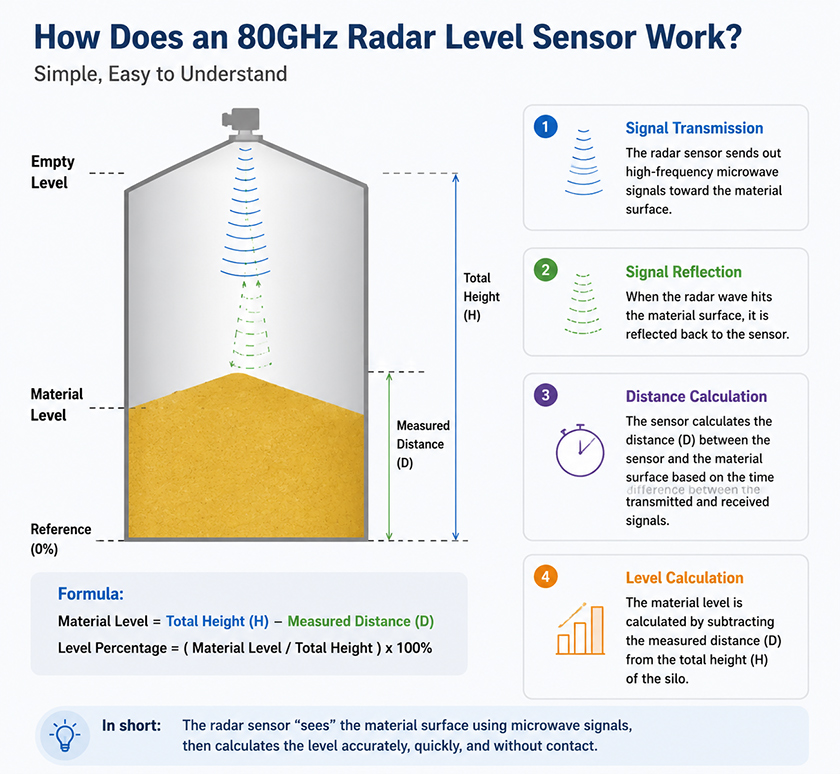
Because it uses electromagnetic waves instead of physical contact or sound waves, an 80GHz radar level sensor can provide stable and accurate measurement for solids such as grain, powder, cement, and bulk materials, even under challenging conditions with dust, temperature changes, and material movement.
Types of Radar Level Sensors
Radar level sensors are mainly classified by frequency and technology.
1 Pulse Radar Level Sensor
Frequency:
- 6GHz
- 26GHz
Characteristics:
- Sends radar pulses
- Traditional radar technology
- Suitable for general applications
2 FMCW Radar Level Sensor
Common frequencies:
- 26 GHz
- 60 GHz
- 80 GHz
Characteristics:
- Continuous frequency modulation
- Higher accuracy
- Better resolution
- Widely used in modern industrial measurement
Why Use 80 GHz Radar for Solid Level Measurement?
Advantages of 80 ghz fmcw radar for tank level measurement
1. Narrow Beam Angle
80 GHz radar typically has a beam angle of around 3–8°.
Benefits:
- Less interference from silo walls
- Suitable for narrow silo openings
- Better measurement in tall tanks
2. High Accuracy
80GHz radar can achieve millimeter-level accuracy up to ±2mm
Ideal for:
- Inventory management
- Process control
- Material consumption monitoring
3. Excellent Dust Performance
Solid applications often create dust during filling, emptying and mixing. Radar technology is less affected by dust compared with ultrasonic measurement.
4. Non-Contact Measurement
The sensor does not touch the material.
Benefits:
- No mechanical wear
- No contamination
- Reduced maintenance
5. Suitable for Small Installation Openings
Because of the narrow beam:
- Smaller flange size
- Easier installation
- Better signal focusing
Limitations of 80GHz Radar Level Sensors
Although 80GHz radar has many advantages, there are still some limitations.
| Limitation | Explanation |
|---|---|
| Higher cost | More advanced technology compared with ultrasonic |
| Installation requirements | Correct positioning improves performance |
| Very low dielectric materials | Some materials may require optimized settings |
| Heavy dust accumulation | Extremely dusty conditions may require antenna cleaning |
80 GHz Radar vs 26 GHz Radar vs 60 GHz Radar
Industrial radar level sensors commonly use several frequency ranges.
Comparison Table
| Feature | 26GHz Radar | 60GHz Radar | 80GHz Radar |
|---|---|---|---|
| Technology | FMCW/Pulse | FMCW | FMCW |
| Frequency | 26GHz | 60GHz | 80GHz |
| Beam Angle | Medium | Narrow | Very Narrow |
| Accuracy | ±5-10mm | ±3-5mm | ±1-2mm |
| Dust Performance | Good | Excellent | Excellent |
| Small Nozzle Installation | Good | Better | Best |
| Complex Silos | Good | Good | Excellent |
| Common Applications | General industry | Smart sensors | Precision industrial measurement |
For industrial silo level measurement, 80GHz FMCW radar has become one of the leading solutions because of its higher resolution, narrower beam angle, and stronger adaptability.
Case Study: HOLYKELL 80GHz Radar Level Sensor for Corn Grain Silo in Costa Rica
Customer Background
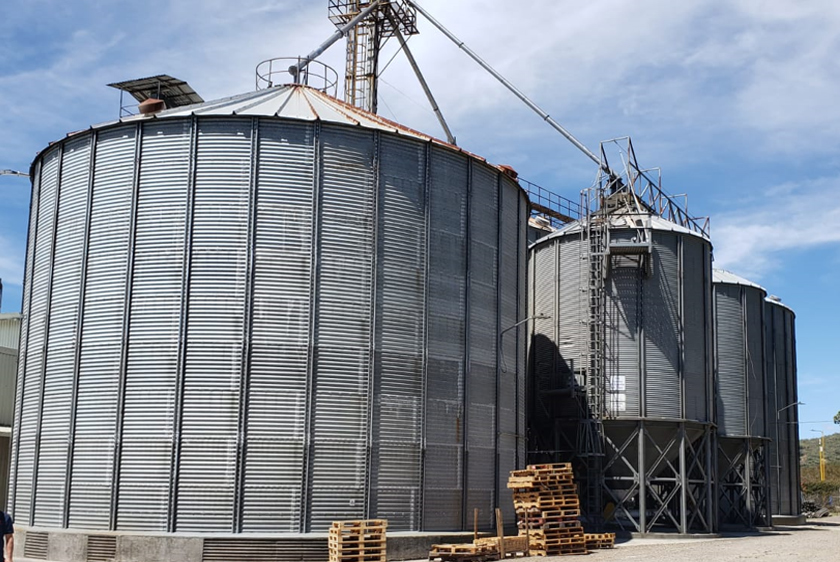
A farm owner in Costa Rica was looking for a reliable level measurement solution for his grain storage silos. The silos are mainly used for storing agricultural materials such as crushed corn and other grain products.
Customer Challenges
Before installing a radar level measurement solution, the customer faced several difficulties:
1. Heavy Dust During Operation
The loading and unloading of crushed corn generated significant dust inside the silo, affecting measurement stability.
2. Unstable Level Readings
Traditional measurement methods were unable to provide consistent readings due to changing dust conditions and material movement.
3. Frequent Manual Inspection
Without reliable real-time level monitoring, operators needed to manually check silo levels, increasing labor costs and operational risks.
4. Need for Better Inventory Management
The farm needed accurate information about stored grain levels to improve storage management and avoid overfilling or unexpected material shortages.
HOLYKELL Solution
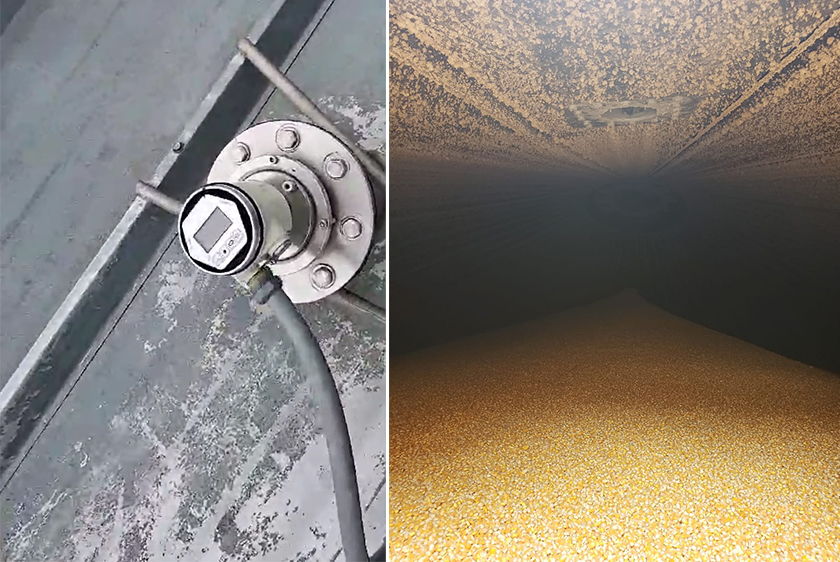
To solve these challenges, the customer installed a HOLYKELL grain silo level sensor on the top of the grain silo. Compared with traditional contact measurement methods, the 80GHz radar solution provides unbeatable advantages for heavy dust applications. The narrow beam angle of the 80GHz radar also helps reduce interference from silo walls and improves measurement reliability in confined silo spaces.
Application Results
After installation, the HOLYKELL radar level sensor helped the farm achieve:
-
- ✔ More accurate grain inventory monitoring
- ✔ Stable measurement during dusty filling and emptying processes
- ✔ Reduced manual checking frequency
- ✔ Improved silo operation efficiency
- ✔ Safer grain storage management
Why Choose HOLYKELL 80GHz Radar Level Sensor?
HOLYKELL provides industrial radar level measurement solutions designed for harsh environments.
Key features:
- CMOS millimeter-wave RF chip, accuracy up to ±1mm
- Wide measuring range up to 120m & 200°C temperature, suitable for both small and huge tanks and harsh environment
- Capable of almost all the liquids & solids
- 80GHz frequency, 5GHz work band, offering higher resolution and precision, especially perfect for detecting small targets
- 3° antenna beam angle & smaller blind area reduces environmental interference
- Remote commissioning & upgrade cuts waiting time and improve work efficiency
Applications:
- Grain silo level measurement
- Cement silo monitoring
- Powder material measurement
- Chemical storage tanks
- Bulk solids management
Top 10 Frequently Asked Questions
1. What is the difference between radar and ultrasonic level sensors?
Radar and ultrasonic level sensors are both non-contact measurement technologies, but they work differently. Ultrasonic sensors use sound waves to detect the material surface, while radar level sensors use electromagnetic waves.
Because radar waves are less affected by temperature changes, dust, vapor, and airflow, radar level sensors usually provide more stable performance in harsh industrial environments such as grain silos, cement tanks, and powder storage applications.
2. Can radar level sensors measure grain?
Yes. Radar level sensors are widely used for measuring grain and other bulk solid materials.
Typical applications include:
- Corn silos
- Wheat storage
- Rice silos
- Feed storage
- Grain processing plants
80GHz FMCW radar is especially suitable because it provides accurate, non-contact measurement even when dust is generated during filling and unloading.
3. What is an 80GHz radar level sensor?
An 80GHz radar level sensor is a non-contact measurement device that uses high-frequency radar waves to measure material levels.
4. What is the difference between 26GHz and 80GHz radar?
80GHz radar provides a narrower beam angle, higher accuracy, and better performance in complex silo applications.
5. Can radar level sensors work in dusty environments?
Yes. Radar technology performs well in dusty environments, especially FMCW 80GHz radar.
6. Does the material type affect radar measurement?
Yes. Material dielectric properties influence reflection strength, but modern radar sensors can handle most industrial solids.
7. How accurate is an 80GHz radar level sensor?
Many industrial 80GHz radar sensors can achieve accuracy up to ±2mm.
8. Do radar level sensors require maintenance?
Because radar is non-contact, maintenance requirements are generally very low.
9. Where should a radar sensor be installed on a silo?
The sensor should be installed based on the tank shape and structure.
10. How do I choose the right radar level sensor for my silo?
Consider measuring range, material type, dust level, tank structure, accuracy requirements, accuracy, power supply and communication needs.
Conclusion
For solid level measurement applications such as grain silos, powder tanks, and bulk material storage, 80 GHz FMCW radar technology provides a reliable, accurate, and maintenance-free solution.
Contact us for more radar solutions.